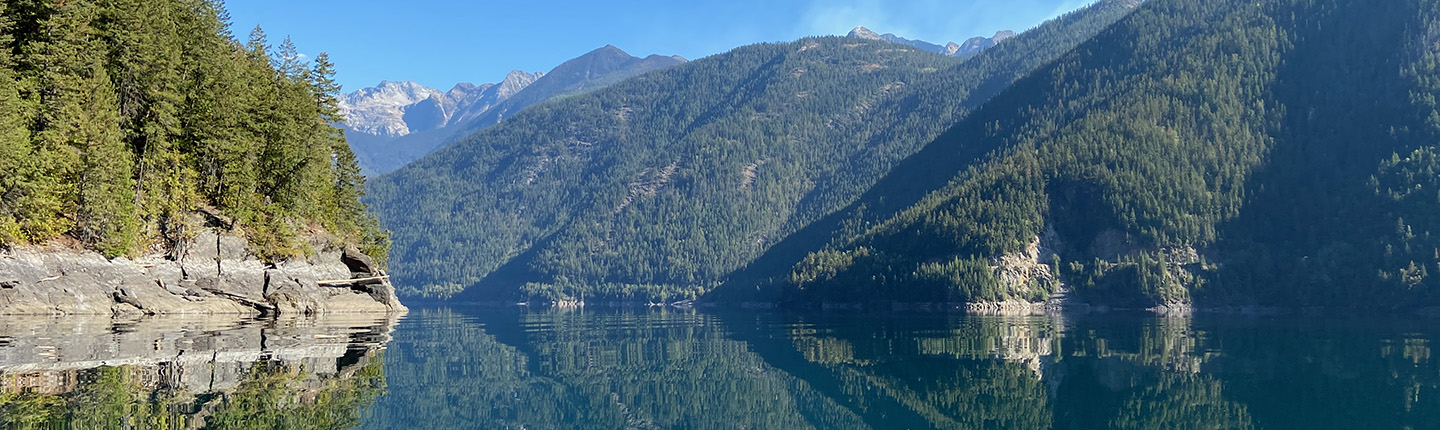
POST_COA_F25_4086_Trethewey_Channel_ARMS.jpg Photo: ARMS

Funding

New Funding Priorities

We are renewing our approach to project funding and the way we communicate with grant applicants and others about our priorities for compensation projects.

In spring 2026, each of our regional boards endorsed new, draft funding priorities and we are now seeking feedback before our board finalizes them in 2027. 

Grant applicants: engage early with First Nations

Our annual grant intake opens Thursday, July 23, 2026. New this year, we require all grant applicants in our Coastal Region to engage early with the appropriate First Nation(s) prior to submitting their grant application.

Register for Coastal Region info session: engaging early with First Nations.

Review our regional guidance to learn more about early engagement with First Nations. 

~$12 million for 2026—2027 fish and wildlife compensation projects

Our three regional boards approved approximately $9.7 million for 77 fish and wildlife projects to be delivered in 2026—2027 in our Coastal, Columbia, and Peace regions.

Another $2.3 million was approved for First Nations Directed Projects (Columbia and Peace regions), Community Engagement Grants, Land Securement Grants, and Seed Grants. These board-approved funds will be allocated throughout the year, bringing the total approved funding for fish and wildlife compensation projects to $12 million in 2026—2027.

The projects approved for funding this year align with our priority actions and reflect our primary obligation to compensate for dam impacts to fish, wildlife, and their habitats in the watersheds where we operate.

Review our user guides

If you have an approved grant and a signed contribution agreement, refer to our user guides for click-by-click instructions on how manage your grant. 

If you have any questions, please contact your region manager.

Submitting a change request

Submitting a draft final report

Submitting a progress report

Submitting a statement of account

CUTOUT-Heron-R-image002-199x300.png

Manage your grant

Follow this link to login to our online grant management system to manage your grant and project.

Contact your region manager if you have any questions. Please refer to our user guides to help manage your reporting, financial statements, and request changes.


Grizzly Bear and her cubs in early morning in the Grand Tetons

Year-round grants


Apply any time for the following grants, funding is available until fully allocated:

Community Engagement Grant

Land Securement Grant

Seed Grant

CUTOUT-arcticgrayling_mtilson.png

Share project photos!

We want to share photos and results from the projects we help fund, so more people know about our shared work.

Send photos or videos about projects with FWCP funding to fwcp@bchydro.com. Be sure to tag us in your social media posts @fishandwildlifecompprogram on IG.

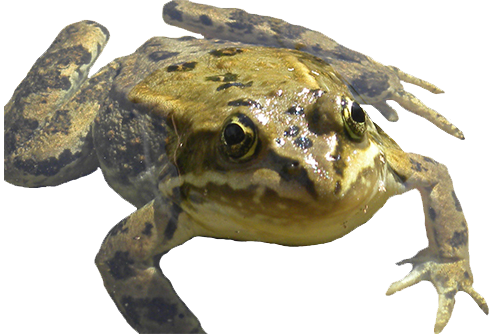
CUTOUT-Columbia-spotted-frog-R-A-Glass.png

FAQs

How do I apply for a grant?

Our annual grant intake is open as of Thursday, July 23, and closes Monday, November 2, 2026. Regional guidance for grant applicants will be available before intake opens.

Follow these steps:

1.    Review our regional action plans

Our regional action plans identify the priority actions eligible for FWCP grants (see the action tables in each action plan). Your proposed project must align with one or more priority action(s) in any of our regional action plans.

Our regional managers can help you align your project idea with a priority action(s) in our action plans.

2.    Develop a project idea to fulfil an action

Develop a project idea that aligns with one or more priority action(s) in any action plan(s) that will achieve the intended outcome(s). Be sure you have selected an OPEN or OPEN/DIRECTED priority action.

REMINDER!

Review relevant project reports and outcomes

Before developing your grant application, review our project report list for relevant work already completed. If there is a relevant project report, consider how, or if, the work you propose in your grant application will build on past work. The FWCP has posted more than 500 final reports on provincial databases, making our project results and data available to anyone. A searchable spreadsheet for all final project reports is available at http://fwcp.ca/results.html.

You may also wish to review relevant provincial databases for projects not funded by the FWCP to identify recommendations or reports that could support your grant application.
Species Inventory Database
EIRS: Environmental Information Resource System
EcoCat: Ecological Reports Catalogue
CLIR: Cross-Linked Information Resources

3.    Review our regional guidance documents

Each of our three regions—Coastal, Columbia, and Peace—are unique, and the requirements for grant applicants vary by region. To help with your grant application, we prepare updated guidance documents annually for each region. 

Our updated guidance for Columbia and Peace region grant applicants will be available before our grant intake opens on Thursday, July 23.

4.    Start your online grant application

We will update this FAQ when our next grant intake opens in summer 2026.

5.    Complete all mandatory sections of the grant application

Be sure to complete all sections of the online grant application and fulfil all mandatory requirements. These requirements vary by region.

6.    Submit your online grant application by Monday, November 2, 2026

We suggest you avoid submitting your application immediately before the deadline in case you need to make corrections or additions. We only review grant applications received by the deadline.

Tips for multi-year grant applications

  • If your project spans multiple years, you must apply for funding annually. Approval of annual FWCP funding for a multi-year project does not guarantee FWCP funding in future years.
  • If you are in year two or more of a multi-year project, you can save time by contacting us to request a copy of your previous application. This copy can be used to start the current year’s grant application.
  • If you are beyond year one of your multi-year project, your grant application must identify achievements and challenges encountered in previous year(s).

Eligible grant applicants include: First Nations, communities, and businesses; consultants, agencies, non-government organizations, local governments, individuals, and academic institutions.

All successful grant applicants must be able to provide:

  1. a WorkSafe BC clearance letter; and
  2. proof of commercial general liability.

Description

Project summary: Project title, project summary statement, and project urgency
Project details: Species that will benefit, detailed project description

Applicant information
Applicant information: Organization, project contact, signing authority, collaborators, project supporters, Indigenous engagement, and project volunteers

Project information
Project location information: Map, location description, project coordinates (latitude and longitude)
Alignment with action plan(s): Primary action plan, sub objective, action type, alignment with priority action and intended outcome(s), and optional alignment with secondary action plan

Project details
Alignment with core element(s): How your project reflects our primary obligation to compensate for dam impacts to fish, wildlife and their habitats; as well as First Nations values and conservation priorities.

Single or multi-year project: Project duration, provide overview of project achievements and challenges for ongoing multi-year projects
Project phases: Start-up, fieldwork, data entry and analysis, community engagement (i.e., define how you plan to share your project results and involve others in your proposed project), draft reporting, and final reporting
Benefits: Benefits to fish and/or wildlife
Ongoing maintenance: Is ongoing maintenance required to sustain benefits?
Effectiveness monitoring: Do you have an effectiveness monitoring plan if your project involves restoration/enhancement?
Community engagement: What are your plans to share results and engage with First Nations, stakeholders, and others?
Permits and approval: BC Hydro-owned lands, proximity to BC Hydro facility, landowners, required permits, and approvals

Project budget
• Labour expenses, materials, equipment, transportation, and field expenses
• Project administration costs
• GST section
• Additional revenue (i.e., other funding sources, in-kind and volunteer contributions)
Funding: You will be asked about any previous FWCP funding you have received, as well as any previous applications you made that were not approved.

Proposals

A six-page (maximum) project proposal is required for all annual grant applications only. 

Letters of support
Include mandatory letters of support for your project in our Coastal Region. Letters of support for your project are optional in our Columbia and Peace Regions, but they can be used to strengthen your grant application. If you choose to submit letters of support along with your grant application, please ensure the letter author(s) clearly indicate their support for your proposed project and specify their involvement (i.e., actively involved, engaged in project planning and/or delivery, providing in-kind and/or cash support, or supporting the project in principle). A letter of support should come from an organization, First Nation, or government agency, and it should demonstrate how the support is relevant to your project.

Experience
Project contact experience: It is mandatory to include the experience and credentials of the project contact. We encourage you to provide the credentials and experience of key team members so we can properly evaluate your grant application. Please note if your proposed project activities involve ‘reserved practice’ according to the Professional Governance Act make sure you have team members with the appropriate credentials to perform or oversee the work.

Our action plans guide FWCP investments in fish and wildlife projects, and are referenced annually by our regional Boards to track progress toward implementation, set annual priorities, and guide decision-making in setting out and approving the annual operating plan for each region. Actions in our action plans are eligible for FWCP funding and align with our vision, mission, and geographic scope.

Coastal Region Watershed Action Plans

Columbia Region Action Plans

Peace Region Action Plans

How are grant applications evaluated?

All grant applications go through a three-stage review process that ends with a decision by our three regional boards.

Stage 1: review by FWCP office

  • Project eligibility: Does the proposed project align with our project eligibility criteria?
  • Proponent status: Is the project proponent in good standing with FWCP? If applicable, are past project deliverables complete?
  • Completeness: Have all grant application requirements been fulfilled?

Stage 2: review by technical committees and First Nations Working Groups

Fish and wildlife technical committees in each region review each grant application for technical merit. In our Columbia and Peace regions, First Nations Working Groups also evaluate grant applications.

Results from the technical committees (all regions) and First Nations Working Groups (Columbia and Peace regions) reviews are provided to each board to assist in their review and decision-making in stage 3.
During this stage, our technical committees (all regions) will be evaluating grant applications for:

  • Alignment with the priority action(s) and the intended outcome (see priority action table in each action plan): Are there clear objectives that are specific, measurable, attainable, relevant, and time-bound?
  • Technical design: Are the methods and approaches for the proposed project acceptable and appropriate? Are there direct benefits to fish and/or wildlife?
  • Urgency: What are the implications if the proposed project is approved, or is not approved?
  • Budget: Are the charges for fees and expenses appropriate? Is there a demonstrated good value for the money?
  • Relevant credentials and experience of the team members, and roles of individuals on the project: Does the project team have the skills, expertise, and capacity to carry out the project? Are the right people in the right roles?
  • Community engagement: Does the project include a community engagement component (e.g., project involves volunteers, an outreach event, etc.)?
  • Overall quality of the grant application: Is it a clear, easily understood grant application and project proposal with strong linkages to the priority action(s) and intended outcome(s)?

During this stage, our First Nations Working Groups (Columbia and Peace regions) will be evaluating grant applications for:

  • Inclusion of Indigenous knowledge.
  • Incorporation of First Nations cultural values and perspectives.
  • Approach to sharing project results with First Nations communities.
  • Engagement of First Nations in the proposed project, where appropriate.

Stage 3: review by board members

The three regional boards review each grant application for projects proposed in their region. The boards consider the results of all stage 1 and stage 2 evaluations and make decisions on which grant applications will be approved with conditions. The regional boards evaluate the grant applications and are responsible for all project and funding decisions in each region.
During this stage, our regional boards will be evaluating grant applications for:

  • A strong linkage between the proposed project and the intended outcome(s) as stated in the relevant action plan(s). Are there clear objectives that are specific, measurable, attainable, relevant, and time-bound?
  • Technical design: Are the methods and approaches for the proposed project acceptable and appropriate? Are there direct benefits to fish and/or wildlife?
  • Required engagement of First Nations in the proposed project: Document your engagement efforts in your grant application.
  • Describe how your project will engage with the community. Costs may be included in the project budget.
  • Partnerships: The FWCP values partnerships and encourages all grant applicants to identify and involve project partners and/or funding partners to leverage FWCP funds.
  • Budget: Are the charges for fees (including charge out rates) and expenses appropriate and reasonable? Is there a demonstrated good value for the money?
  • Relevant credentials and experience of the team members, and roles of individuals on the project: Does the project team have the skills, expertise, and capacity to carry out the project? Are the right people in the right roles?
  • Overall quality of the grant application: Is it a clear, easily understood grant application with strong linkages to the priority action(s) and intended outcome(s)?
  • New this year: Although not formally evaluated, the boards will consider how projects reflect our core elements.

What projects are eligible for an FWCP grant?

Each FWCP region has a set of action plans that identify the priority actions eligible for FWCP grants (see the action tables in each action plan).

We fund five types of projects and our action plan tables identify priority actions by project type:Read our regional grant guidance for more instructions.

Your proposed project must align with one or more priority action(s) in any of our regional action plans. Read our regional grant guidance for more instructions.

We fund projects delivered within the boundaries of our Coastal, Columbia, and Peace regions.

We fund and support the following types of actions, which are consistent with our mandate:

  • Actions to create, restore, or otherwise improve the function of ecosystems that have been impacted by the permanent loss of habitat associated with dams, including the permanently flooded habitat (below the drawdown zone) resulting from reservoir creation  
  • Specific management actions for species identified by recovery teams and action/implementation groups.
  • Near-term knowledge gathering that informs the development of conservation, restoration, or enhancement actions.
  • Monitoring programs designed to measure the effectiveness of FWCP-funded habitat and ecosystem based projects.
  • We contribute to all aspects of managing co-operatively managed conservation lands.

We do not fund or support the following activities, which are beyond our mandate:

  • Projects to compensate for impacts to fish and wildlife resulting from the operation of a BC Hydro generating facility that has other programs in place (e.g., entrainment, ramping rates, water level changes, structural fish passage through a facility, or reservoir archaeology).
  • The development of species recovery goals, or fund, co-ordinate, or lead national recovery teams for species at risk.
  • Core activities of government or non-government agencies or programs.
  • Enforcement and compliance activities under the purview of government agencies.
  • Programs designed exclusively to address government objectives.

New in 2026: Consider our three core elements.

What’s coming in 2027: We’re in the process of renewing our approach to project funding and will be implementing changes for our annual grant intake that opens next year.

What’s new this year: As a first step toward changes that will be fully implemented starting in summer 2027, we are making a few incremental changes to the questions we ask in our grant application this year.

Prepare for questions about dam impacts, First Nations values, and conservation priorities.

Our revised online 2026 grant application will ask applicants to demonstrate how their proposed project reflects the FWCP’s three core elements (see Figure 1 below), including our primary obligation to compensate for impacts to fish, wildlife and their habitats resulting from BC Hydro dams.

During the review of grant applications in 2026, our regional boards will consider how well the three core elements are reflected in each grant application. Starting in 2027, new evaluation criteria will formally include alignment with our core elements.

Core elements of FWCP-funded projects

The FWCP will consider funding compensation projects that reflect three core elements. The core elements are intended to strengthen alignment between our primary obligation to compensate for dam impacts, and simultaneously consider First Nation values, and conservation priorities in the watersheds where we work. Starting in 2027, these three program-wide elements will guide funding decisions for all of our grants, in all regions, regardless of the proponent or the delivery method.  

Dam Impacts

BC Hydro generating facilities and reservoirs resulted in the permanent loss or alteration of habitat and ecosystems in the reservoir footprint. At the watershed level, dams also impacted aquatic and terrestrial species, and disrupted ecological processes, both upstream and downstream of a dam.

Additionally, the infrastructure (such as roads) necessary for power generation may have enabled further human activity and resource extraction in watersheds where a BC Hydro dam exists, adding to the cumulative effects and creating additional dam-related impacts to fish and wildlife, leading to additional conservation priorities.

Potential projects must demonstrate how the target species, ecosystem or habitat has been impacted by the creation of a BC Hydro dam.

First Nations’ Values

There are known dam impacts to culturally important species, habitats, and ecosystems. Potential projects should reflect Indigenous knowledge systems, laws, and protocols, and demonstrate important elements of Indigenous world views including the concept of all living things being interconnected.

Potential projects should demonstrate how and why the species, habitat, or ecosystem has value for the relevant Nation(s) based on the proposed location for the project and how it was impacted by a BC Hydro dam, if the impact is known. This considers whether a project aligns with the environmental, cultural, and territorial stewardship and caretaking interests of the Nation(s) where the project is proposed.

Conservation Priorities

Human activities place conservation pressures on species, habitats, ecosystems, and ecological functions and processes. This core element considers the need of a proposed project with respect to improving the state of the species, habitat, or ecosystem a project is targeting. This may include the state of the watershed where your project would occur (i.e., the current ecological function and resilience), relevant imminent threats including a changing climate or limiting factors, and conservation status.

Potential projects should demonstrate why a species, habitat, ecosystem, or ecological function/process would benefit from intervention for conservation, restoration or enhancement.


Why does FWCP offer fish and wildlife grants?

The Fish & Wildlife Compensation Program (FWCP) is a partnership between BC Hydro, the Province of B.C, Fisheries and Oceans Canada, First Nations, and public interest holders to conserve and enhance fish and wildlife in watersheds impacted by BC Hydro dams.

The FWCP was established to compensate for impacts to fish, wildlife, and their supporting habitat, resulting from the construction of BC Hydro dams.

BC Hydro has water licence obligations in the Columbia and Peace regions, and has made voluntary commitments to address the construction impacts of dams in the Coastal Region. BC Hydro fulfils the applicable obligations through the work of the FWCP.

The FWCP is funded annually by BC Hydro. The FWCP directs those funds towards projects that address priority actions across its three regions to fulfil its mission, and work towards its vision of thriving fish and wildlife populations in watersheds that are functioning and sustainable.

The Fish & Wildlife Compensation Program (FWCP) conserves and enhances fish and wildlife in watersheds impacted by BC Hydro dams. The FWCP is funded annually by BC Hydro. The FWCP directs those funds towards priority actions across its three regions to fulfil its mission and work towards its vision of thriving fish and wildlife populations in watersheds that are functioning and sustainable.

By funding projects to support fish and wildlife populations in our Coastal, Columbia and Peace Regions, the FWCP is fulfilling BC Hydro’s applicable water licence obligations and voluntary commitments to compensate for fish and wildlife impacts.