Northern spotted owl facts
- The northern spotted owl is the rarest owl in Canada.
- It’s one of three sub-species of spotted owl.
- They prefer old-growth forests habitats.
- It’s among the largest owls in North America (40-48 cm long).
- It typically lays two to three eggs per clutch.
- It gets its name from the distinct spots on its head and back.
- The typical call is a four-note “who hoo hoo whoo.”
- Strix occidentalis caurina is the scientific name for this species.
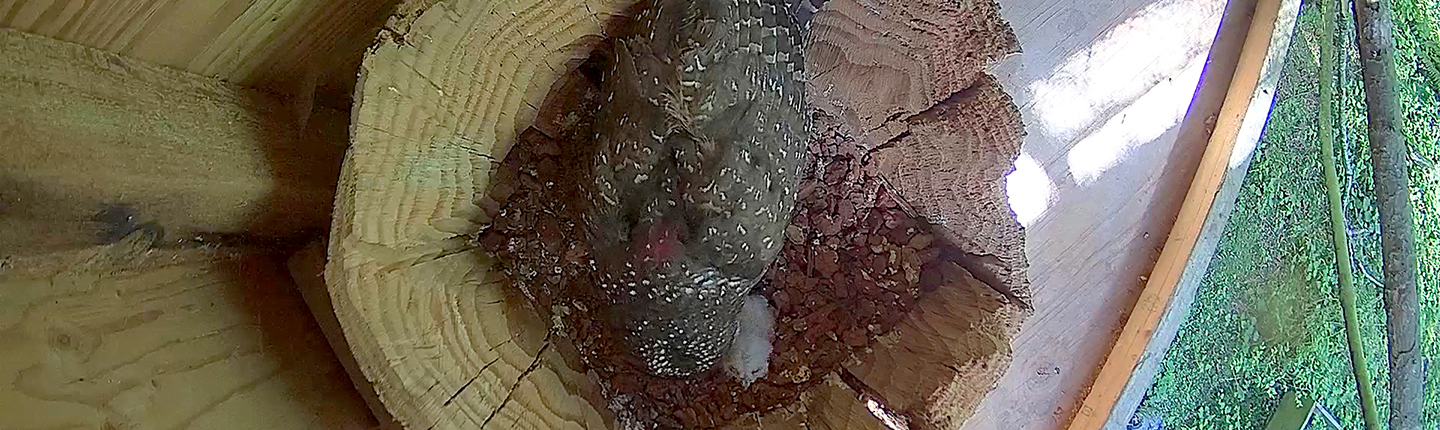
- This captive breeding program is a critical part of the recovery effort of this owl in Canada.
FWCP and the Northern Spotted Owl Captive Breeding Program
One of the reasons the northern spotted owl is at risk in Canada is due to habitat loss resulting from a variety of human activities such as timber harvesting and human settlement, including the creation of reservoirs. That’s why FWCP is involved: our mission is to conserve and enhance fish and wildlife impacted by BC Hydro dams. In addition to funding the breeding program, the FWCP has also funded research and monitoring on northern spotted owls. Subscribe and stay informed about FWCP grants, and the projects we fund, including this one. If you have questions about the FWCP, please ask us: fwcp@bchydro.com.
The Northern Spotted Owl Captive Breeding Program’s objective is to release captive-raised owls into protected habitats, with the goal of establishing a viable self-sustaining population of spotted owls within the Lillooet area.
The Northern Spotted Owl Captive Breeding Program is funded by BC Hydro, the British Columbia Conservation Foundation, the Fish & Wildlife Compensation Program, INNERGEX, the Government of Canada, and the Province of B.C.