


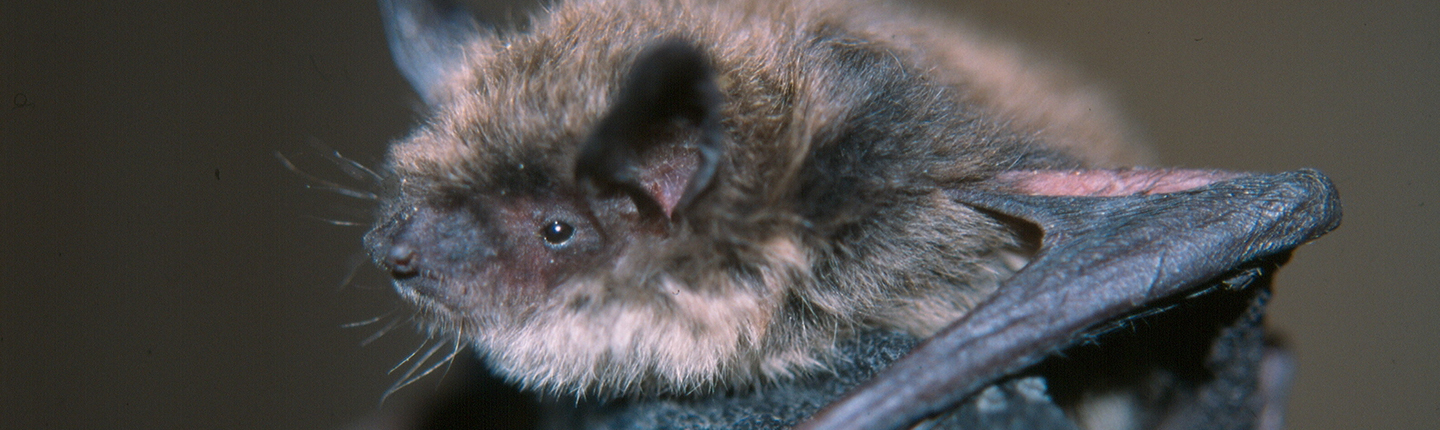
Conservation of Bat Roosting Habitat in Clowhom Watershed
Already at risk, B.C.’s bat species face a new threat from the devastating white-nose syndrome.
This project will carry out conservation projects to improve habitat for at-risk bat species in the Clowhom River Watershed near Sechelt. The goal is to build a healthy and resilient bat population to increase its chances of survival if disease hits.
Update: 57 bat roost counts completed and 19 new roosts located
This was a busy year for the project team:
- 19 new bat roosts were identified
- 57 bat roost counts were completed at 28 sites (including 11 roosts in Clowhom and 17 in the surrounding Sunshine Coast communities)
- seven dead bats were documented during the white-nose syndrome surveillance period and five of those carcasses were sent for health testing
- nine winter bat roost sites were identified
- 43 bat houses were checked for occupancy
- 12 school programs were conducted
- five public bat walks and talks and one bat box workshop were held
- 60 new bat boxes were constructed by students and community volunteers for installation at suitable sites
- 94 volunteer hours were logged
Executive Summary (abridged)
Bats are one of the most threatened wildlife groups in British Columbia. Of 15 regularly occurring bat species in the province, 11 are officially listed as either provincial or federal species at risk (BC Bat Action Team 2024). Bats face many threats, including habitat loss and degradation, declines in populations of insect prey, chemical pollution, mortality at wind turbines, and accidental and deliberate human disturbance. The most imminent threat to bats in British Columbia is white-nose syndrome (WNS). This introduced fungal disease has devastated bat populations in central and eastern Canada and the United States, killing up to 95% of bats in affected colonies. The disease-causing fungus was detected in our province for the first time in a guano sample collected in 2022 from Grand Forks, BC.
Clowhom watershed is a very important site for bats on the Lower Sunshine Coast. Situated 32 km northeast of Sechelt at the head of Salmon Inlet, it provides important bat foraging habitat and is home to the two largest currently known bat maternity colonies in the entire Sunshine Coast Regional District. This report summarizes work carried out between April 2023 and March 2024 to help ensure the survival of bats and their habitat in the Clowhom watershed and in surrounding communities on the Sunshine Coast. Our objectives were: (1) to undertake white-nose syndrome surveillance; (2) to increase the number of protected bat maternity roosts; (3) to contribute data to guide conservation of bats; (4) to increase community awareness and participation in bat stewardship efforts; and (5) to improve and increase bat roosting habitat.
To undertake WNS surveillance in the summer, we conducted emergence counts from known bat roosts. Between June and September 2023, we carried out 57 roost counts at 28 Sunshine Coast roost sites, including 11 in Clowhom.
To date, there has been no evidence of reduced bat numbers that would indicate WNS-related population declines.
To monitor for signs of white-nose syndrome during the winter, we solicited reports from community members about dead bats and winter roosts. We documented nine winter roost sites, including five in woodsheds and four in homes. We recorded seven dead bats during the WNS surveillance period from November to May and submitted five carcasses to the Animal Health Lab for testing. An additional 24 dead bats were reported outside of WNS surveillance window and 14 of these carcasses were sent for health testing. As of March 2024, none of the dead bats submitted thus far from the Sunshine Coast, or from any other part of BC, have tested positive for WNS.
To increase the number of protected bat roosts, we reached out to Sunshine Coast residents. Through these efforts, we identified 19 new bat roosts. We provided information to these homeowners about how to protect and maintain these sites or undertake safe exclusion while providing alternate roosting options.
To increase community awareness and participation in bat stewardship efforts, we offered 12 educational workshops for elementary school students, offered 1 community bat building workshop, provided 5 free public bat walks and talks, published 3 media articles, and facilitated community participation in bat population monitoring efforts. This year, 22 community members provided 94 volunteer hours on bat roost emergence counts.
To improve bat roosting habitat, with help from local students and community volunteers, we built 60 new bat boxes for installation at suitable sites around the Sunshine Coast. We also designed and constructed a new free-standing bat box condo to replace a major roost building that had been destroyed. Key conservation priorities for bats in Clowhom include ongoing white-nose syndrome surveillance, population monitoring, acoustic surveys, evaluation of bat house occupancy, maintenance of key roosts, and surveys to identify additional roost sites, including those in trees and bridges. WNS surveillance activities should include: (1) annual monitoring of bat colonies (2) collection of spring guano to test for presence of disease-causing Pseudogymnoascus destructans (Pd) fungus; and (3) collection and submission of dead bats during the surveillance window from November to April.
Further surveys of Clowhom bat boxes and bat box clusters are recommended to determine how quickly these structures become occupied and assess bat numbers, species, and timing of occupancy. Acoustic surveys are recommended to clarify year-round patterns of bat activity in the watershed and fill knowledge gaps about the timing and movement patterns of threatened migratory bat species. Additional research priorities include mist net surveys to confirm species present, and surveys seeking to locate fall swarming sites, winter hibernacula, and bat roosts in trees and bridges.
This project is addressing three Priority 1 actions identified in the Clowhom Watershed Plan (2020). Our surveys are helping to identify and protect bat maternity roosts (Action 16) while our bat house surveys are helping to assess effectiveness of bat enhancement and mitigation efforts (Action 21). We are implementing priority species- and habitat-related conservation actions identified in recovery and management plans for species at risk (Action 13). Specifically, we are undertaking priority actions identified in the BC Bat Action Plan (BC Bat Action Team 2024) and the federal Recovery Strategy for Little Brown Myotis (ECCC 2018).
By undertaking white-nose syndrome surveillance, we are helping to provide for early detection of the arrival of the disease to enable a rapid conservation response. Our roost emergence counts at Clowhom maternity colonies are providing pre-WNS baseline abundance data, against which future disease-related declines can be measured to assess impacts. By working with landowners and stakeholders to conserve bat maternity roosts in Clowhom and beyond, we are helping to keep bat populations healthy prior to the arrival of the disease and ensuring that habitat is maintained to support recovery. Our community outreach and engagement activities are helping to dispel negative myths about bats and increase stakeholder support for, and participation in, bat habitat and species stewardship efforts.
Bats play a crucial ecological role as major consumers of forest pests, eating up to their body weight in insects each night. They also contribute to nutrient cycles, moving nitrogen from aquatic ecosystems, like wetlands and riparian areas where they consume their insect prey, to upland forest ecosystems where their droppings fertilize trees (Duchamp et al. 2010). Thus, helping bats will help maintain the overall health of ecosystems in the Clowhom watershed.
Click the provincial database link below to read the full final report for this project.