


Enhancing Caribou Survival in the Klinse-Za/Scott East Herd Area Year 10 of 10
This First Nations-led project aims to enhance the survival rate of caribou cows and calves in the Klinse-Za Herd through maternity penning.
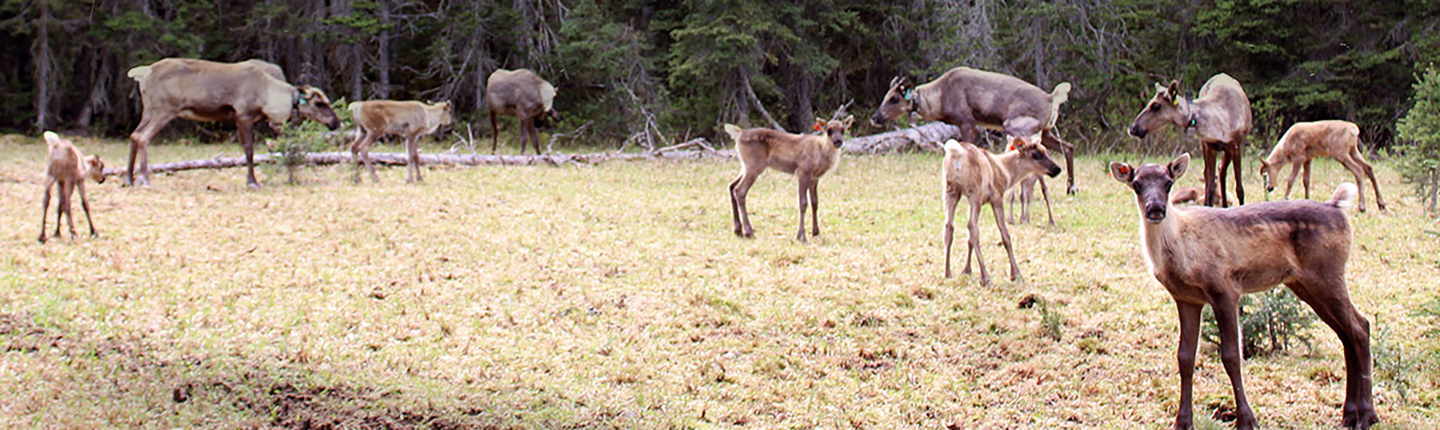
Pregnant cow caribou will be captured in early March and transported to a protective maternity pen located in the caribou’s natural calving range. The cows will be fed and monitored until mid-summer—when calves have grown to a point where they are less susceptible to predation by wolves and bears—then released back into the wild.
The project enhances survival of calves and supports recovery efforts while habitat restoration is underway.
Update: 20 caribou cows penned
Every March a skilled team capture caribou from the endangered Klinse-Za herd and put them in a secure pen. This annual ritual is key part of ongoing efforts to recover woodland caribou populations in B.C.'s north.
In March 2026, 20 adult female cows were safely captured, assessed, and transported to a maternity pen in the herd's traditional range for the 2026 calving season.
The cows, and their new calves, will stay in the pen until mid-summer, when the calves are stronger and less susceptible to predators.
Guardians from the West Moberly First Nations, Saulteau First Nations, and the McLeod Lake Indian Band, oversee the caribou, and play a vital role in this work to support the herd. Recent estimates suggest the herd is close to 200 individuals today.